Multi-Currency Financial Reconciliation: The Mathematical Logic of Hesab-Ras
How the Hesab-Ras mathematical engine minimizes currency volatility risk across Afghani, USD, and regional currencies in real-time ledgers.

Executive Summary & Key Takeaways
- The Hesab-Ras engine binds every ledger row with dual coordinate values: nominal foreign currency and base AFN counter-value.
- Automated real-time revaluation prevents fictitious profit reporting triggered by exchange volatility.
- Deep Sarafi hawala tracking reconciles cross-border settlements without reliance on international correspondent banks.
The Mathematical Coordinate System of Hesab-Ras
In multi-currency commercial ecosystems, every transaction possesses two inseparable vector coordinates: the nominal amount transacted in the deal currency (USD, AED, EUR, etc.) and the instantaneous exchange rate against the enterprise functional currency.
Hesab-Ras stores a multi-dimensional ledger matrix for every journal entry, enabling management to strictly differentiate operational mercantile margin from speculative FX revaluation gains or losses.
Sarafi Settlement & Hawala Clearing
Because modern trade in the region heavily utilizes Sarafi hawala channels, Hesab-Ras provides native voucher types for cross-currency netting, clearing commission tracking, and automated counterparty credit caps.
“Financial clarity in multi-currency markets cannot be achieved via spreadsheets. It requires a dedicated, mathematically robust accounting engine.”
Abdulrazeq Quraishi
Principal Architect • Alkharazmi Software Development Team
Ready to deploy tailored resilient architecture?
Our engineers are on standby to review your ledger structures, calibrate multi-currency rules, and support deployment within agreed scope.
Related Engineering Insights
Back to Articles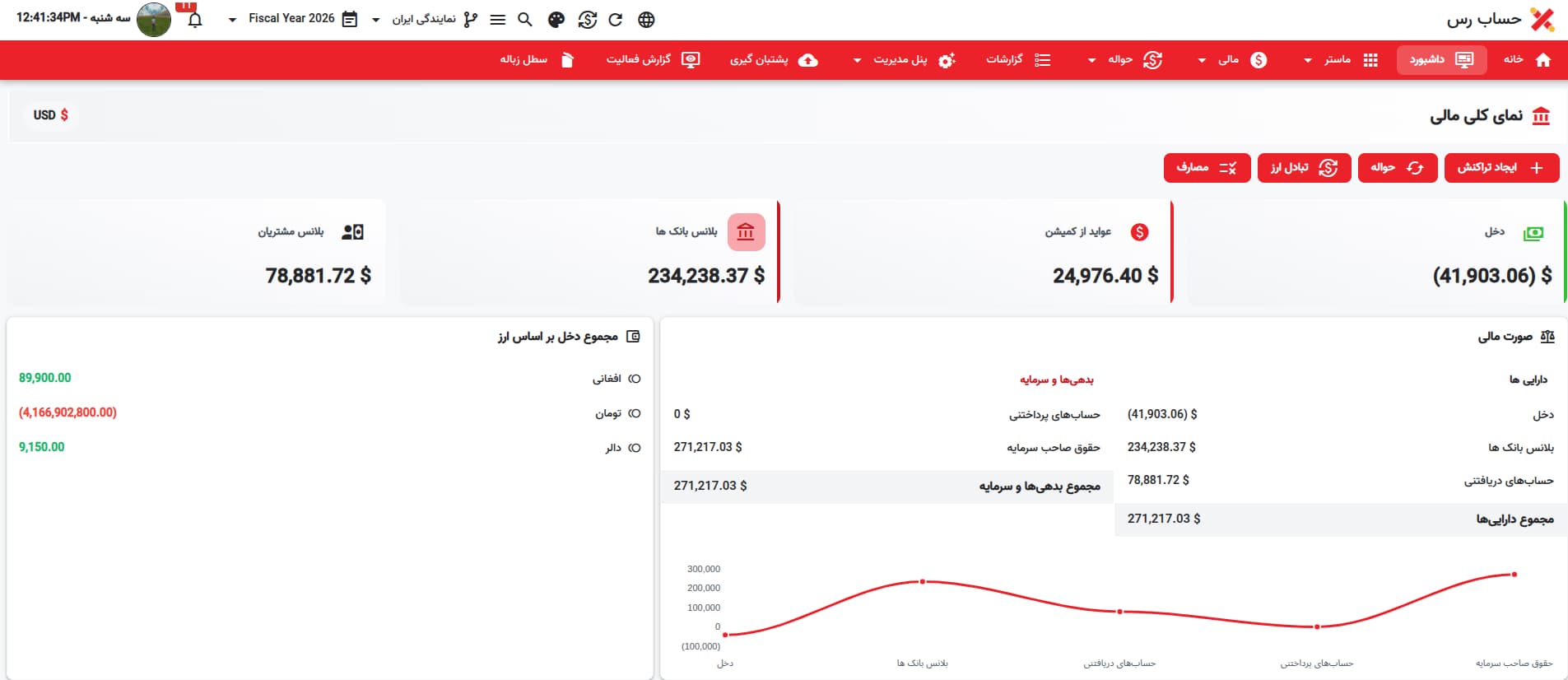
ERP Architecture for Frontier Markets: Why Off-The-Shelf Software Fails
An engineering analysis of why off-the-shelf foreign enterprise software collapses under regional multi-currency dynamics and cash-register realities.

Custom Engineering vs. Packaged Templates: Re-evaluating Total Cost of Ownership
Real deployment data from 5 manufacturing firms: why custom engineering with local deployment is fundamentally more cost-effective.


Sovereign Data Synchronization Across Variable Bandwidth Networks
Offline-first CRDT conflict resolution protocols that keep enterprise warehouses operational during total public network dropouts.